Biography
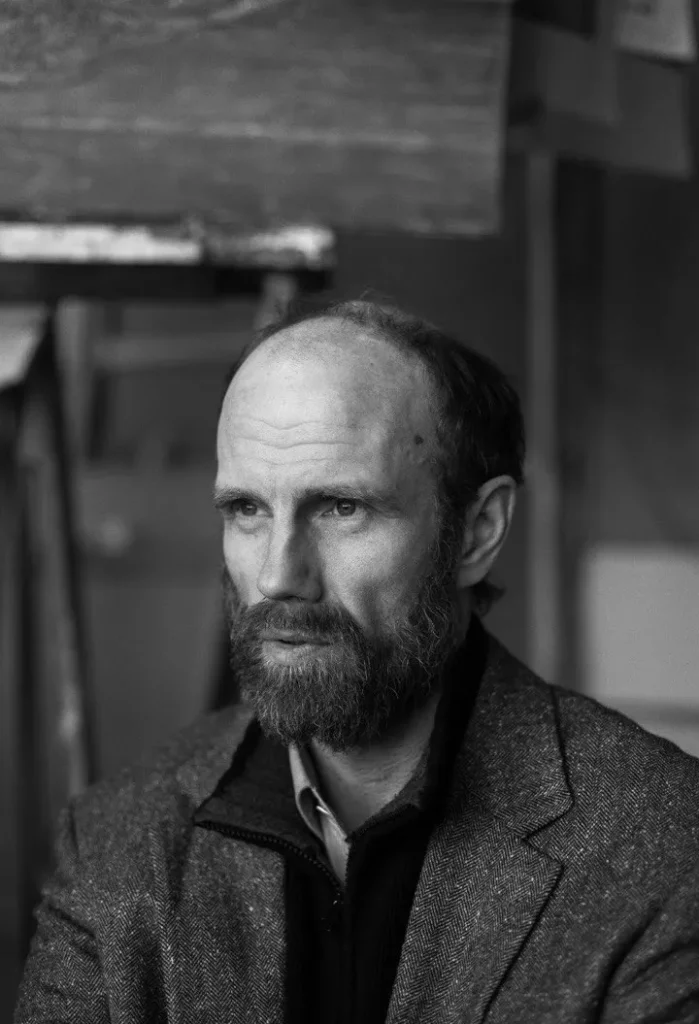
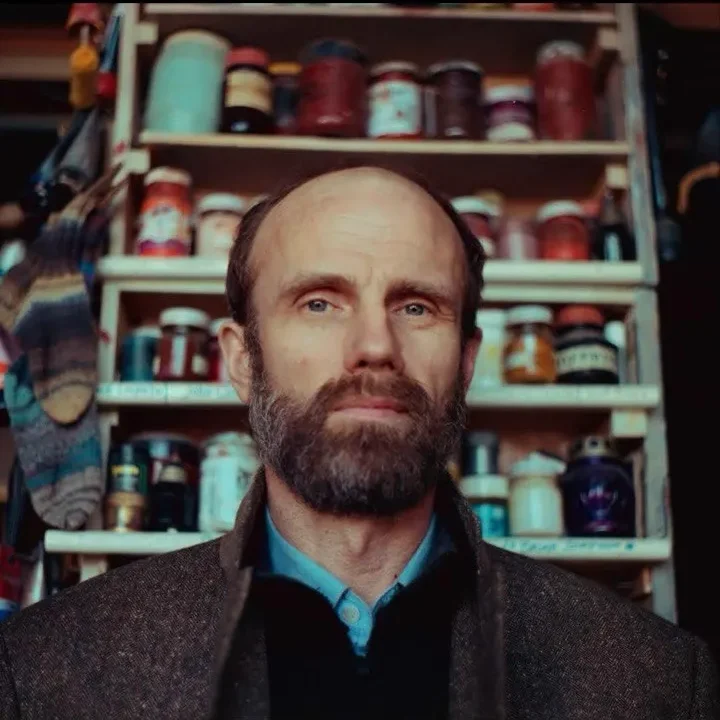
Born on July 31, 1968, in Kharkiv.
1983–1987 – studied at the Kharkiv State Art College under Yu. I. Lyamin and V. I. Vysykailo.
1993–1994 – auditor at the Painting Department of the Kharkiv Art and Industrial Institute, where he studied under A. M. Konstantynopolsky and V. V. Sizikov.
2000 – participated in the mural paintings of the St. Dmytriy Church in the village of Vasyshcheve, Kharkiv region.
Since 2002 – member of the Kharkiv Organization of the National Union of Artists of Ukraine.
Since 1989 – participant in national and international exhibitions.
Solo exhibitions: Kharkiv (1994, 1996, 2009, 2017, 2018, 2019); Kyiv (1996); Moscow (1994); Belgium (1995, 1996, 1997, 1999); France (1999, 2012, 2017); Germany (2000, 2016, 2017); USA New York (2007, 2019, 2022, 2024, 2025 ).
Participates in the activities of the creative association “Burime” (since 2002), the project of the cultural and urban action “On the Paths of Vasylkivsky: A Look Through the Centuries” (since 2005).
2008- project “On the Paths of Vasylkivsky”
Since 2009, he has been participating in Vasyl Synchuk’s project “Ukrainian Strongholds”:
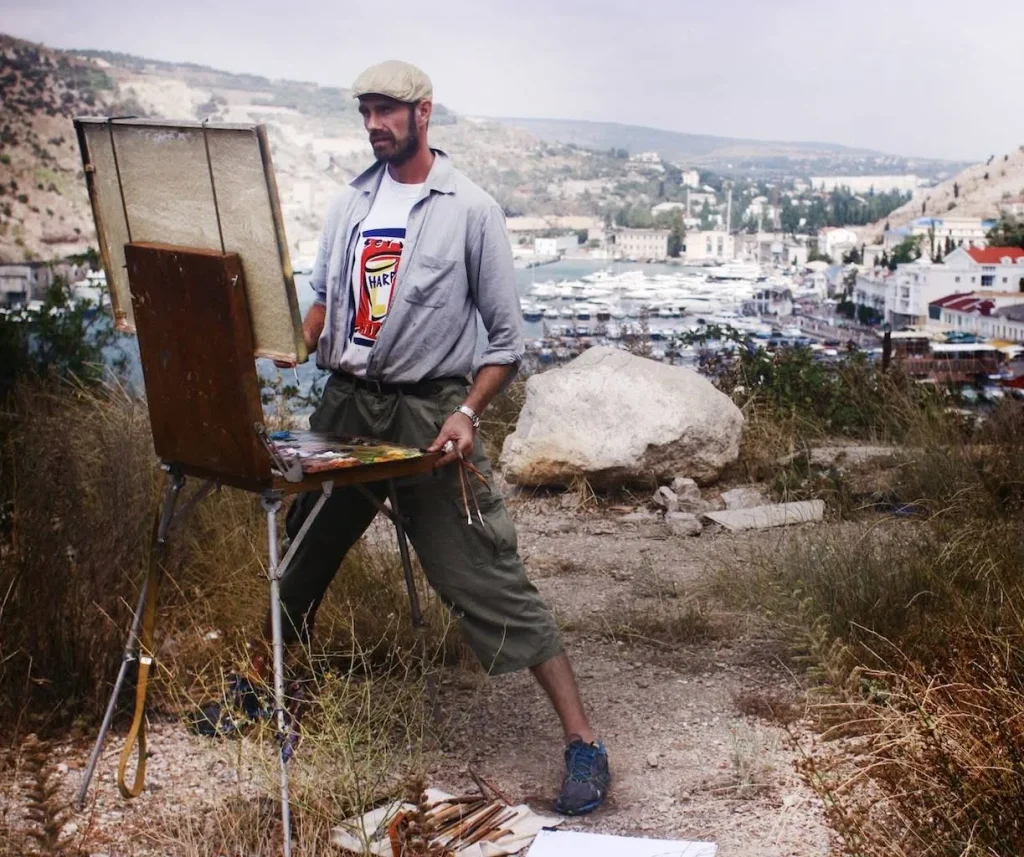
2009 – plein air in the Pochaiv Lavra
2010- plein air in the Trinity-Sergius Lavra
2011- plein air in Jerusalem.
In 2012, a plein air took place in Normandy (France)
2013- takes part in the exhibition at the “AS” gallery together with the group “Letter”A” – “Plenair”
2013 – participation in the exhibition of watercolors and graphics from the Museum Funds and private collections. New Year’s Christmas exhibition “Tales, fantasies…” etc…
Ethers and Mistrals
Exhibition, Ukraine
2019
The works of Alexandr Reznichenko are held in Privat collections in Ukraine and all countries of Europe and America.
He takes part in the activities of the creative association “Buryme” (since 2002) and in the cultural-artistic project “In the Footsteps of Vasylkivsky: A Look Through the Century” (since 2005).
“Painting is an occupation for the blind,” Pablo Picasso once paradoxically declared, “an artist paints not what he sees, but what he feels.” The painting exhibition of Oleksandr Riznychenko offers vivid proof of this idea.
Concepts of the Artist Oleksandr Riznychenko
Each work by the master Alexandr Reznichenko evokes a sensation of touch — an interpenetration between the inner, spiritual life and the external world expressed in the colors of nature. The foundation of Riznychenko’s creative method lies in his polycultural consciousness; in his work one can find reminiscences of the Impressionists, Post-Impressionists, Mir iskusstva artists, Suprematists, and Art Nouveau.
The artist creates original works full of natural, organic forms and ornamental motifs, where composition is built through unexpected color structures and linear rhythm. In his paintings, every smallest detail of the artistic conception, as well as the overall plastic idea, is deeply thought out and embodies semantic and emotional value. The longer one looks at the artist’s works, the more strongly one feels their life-affirming power and philosophical perception of human existence.
Ether — in ancient Greek philosophy — denotes the subtlest primordial substance, the “quintessence,” or “fifth element,” alongside fire, air, earth, and water. In ancient mythological thought, “ether” was a divine substance filling all space and harmonizing the surrounding world. Mistral — the cold northern wind — was celebrated by Friedrich Nietzsche: “O Mistral, Cloud-Chaser, Melancholy-Slayer, Purifier, Resounding One, I love thee!”
The mistral drives away clouds, clears the air of dust, and makes it possible to see mountains more than a hundred and fifty kilometers away. This purity and transparency of the air have always lured painters to the south of France — especially the Impressionists, who valued such phenomena for their ability to awaken the finest strings of the soul. “Nature here is such that you begin to feel what Color truly is,” wrote Vincent van Gogh about Provence.
Romantic French landscapes likewise became a source of inspiration for Oleksandr Riznychenko. His landscape series “French Provence” (2016–2018) is executed in his characteristic expressive, free manner, where every brushstroke on the canvas is equivalent to a spoken word. Traces of not only the brush but also the palette knife are distinctly visible; the relief texture of the paintings resembles an imprint of the entire palette of emotions that possessed the artist in the moment of creation.
In these works, the harmony of color and fluidity of line help the painter embody the philosophical theory of the all-pervading ether — a conductor of spiritual mood: there is neither sky nor earth, nothing but color and rhythmically recurring waves. Everything here is subordinated to rhythm as the fundamental force of influence.
Through rhythmic combinations, the master strives to express a general philosophical concept of universal harmony — the “code” of the cosmos with its laws of order and cyclic recurrence (day and night, seasons, and so on). Nature knows no lawlessness! (Zigzags of Ultraviolet, 2017; Rhythms of Pink, 2018).
From the polychromy of the Provençal landscapes, Riznychenko creates complete pictorial harmony. Shifts of viewpoint and time of day are reflected in the musical rhythm of his canvases (The Old Cedar, 2017; Avignon Château, 2018; The Ancient Grotto, 2018).
The landscape The Ancient Grotto captivates the viewer with the unity of lyrical and philosophical feeling. The lilac-pink tonality of the summer scenery vibrates with nuances that seem to follow the pulse of nature — changeable and sensitive to the mistral winds. The blue-violet lavender blossoms, the cool turquoise of the grass, the yellow sunlit reflections in the distance — all merge into a quiet, tranquil music. The ancient grotto, once a shelter for French shepherds, becomes an inseparable part of the universe.
The iris flower is often seen as an image of the universe itself. Riznychenko depicts irises in astonishing color variations that enchant the viewer (New Aroma, 2018; Irises, 2018). The cropped compositions, clearly defined planes of saturated color, and monumental blossoms seem to burst beyond the edge of the canvas. Each of these flowers is unique; from different angles they appear to change color, gleaming and radiating energy. Another favorite motif for many painters has been the sunflower. Its vivid hues were especially beloved by the Impressionists. Following this tradition, Riznychenko dedicated his still life Sunflowers (2012) to the genius of Vincent van Gogh.
The theme of ether — as a category uniting human and nature — finds continuation in the series “Alleys” (2017). Riznychenko develops techniques that allow him to render most naturally the mobile and changeable world, where reality intertwines with imagination. He paints what he feels: for him, nature is a teacher to be consulted. In The Huntress, the central figure becomes an inseparable part of nature — a symbol of the human being searching for the meaning of life. The birch alley symbolizes the path — a corridor through which each person passes in search of that meaning. The artist’s message is that the most important thing is to find one’s own path and walk it consciously and with dignity.
In the Alleys series, the painter actively employs an ornamentalist technique, marked by heightened attention to line and detail, woven into a unified whole. That whole acquires its own rhythm and evokes metaphors, associations, and images. We see the picture transform into a complex riddle, fascinating to solve. The works of this series are mythological, appealing to legends, archetypes, and historical motifs. Ornamentalism helps draw images out of the viewer’s subconscious. Riznychenko uses ornament not merely as a depicted object but as a principle of pictorial construction. What begins as a single curve or line later transforms into the trunks of trees, animals, birds, and human figures. In each painting the artist strives to create a deep, harmonious world imbued with its own spirit and emotional character.
The artist’s studies presented at the exhibition reveal his search for a decorative-ornamental principle in nature. Painted en plein air, they approach Impressionism with their light, pure color palette and dynamic sense of a spontaneously captured scene. Riznychenko’s studies always impress through their original composition, conveying the unique atmosphere of landscapes in Slobozhanshchyna, Pereiaslav-Khmelnytskyi, Jerusalem, France, and Crimea.
The canvases of Oleksandr Riznychenko captivate the viewer at first glance, inviting prolonged contemplation. His paintings compel one to look closely and long. The artist began with large narrative canvases on fairy-tale and fantastical themes (Guardian Angel, 1993; Firebird, 1994; The Princess and the Pea, 1994). It is impossible to predict which path Riznychenko’s art will take next, yet judging by what he has already achieved, one can be sure that his new works will continue to captivate audiences.
Marina Filatova
Head of the Department of Foreign Art
Kharkiv Art Museum
Biography
Born on July 31, 1968, in Kharkiv.
1983–1987 – studied at the Kharkiv State Art College under Yu. I. Lyamin and V. I. Vysykailo.
1993–1994 – auditor at the Painting Department of the Kharkiv Art and Industrial Institute, where he studied under A. M. Konstantynopolsky and V. V. Sizikov.
2000 – participated in the mural paintings of the St. Dmytriy Church in the village of Vasyshcheve, Kharkiv region.
Since 2002 – member of the Kharkiv Organization of the National Union of Artists of Ukraine.
Since 1989 – participant in national and international exhibitions.
Solo exhibitions: Kharkiv (1994, 1996, 2009, 2017, 2018, 2019); Kyiv (1996); Moscow (1994); Belgium (1995, 1996, 1997, 1999); France (1999, 2012, 2017); Germany (2000, 2016, 2017); USA New York (2007, 2019, 2022, 2024, 2025 ).
Participates in the activities of the creative association “Burime” (since 2002), the project of the cultural and urban action “On the Paths of Vasylkivsky: A Look Through the Centuries” (since 2005).
2008- project “On the Paths of Vasylkivsky”
Since 2009, he has been participating in Vasyl Synchuk’s project “Ukrainian Strongholds”:
2009 – plein air in the Pochaiv Lavra
2010- plein air in the Trinity-Sergius Lavra
2011- plein air in Jerusalem.
In 2012, a plein air took place in Normandy (France)
2013- takes part in the exhibition at the “AS” gallery together with the group “Letter”A” – “Plenair”
2013 – participation in the exhibition of watercolors and graphics from the Museum Funds and private collections. New Year’s Christmas exhibition “Tales, fantasies…” etc…
Ethers and Mistrals
Exhibition, Ukraine
2019
The works of Alexandr Reznichenko are held in Privat collections in Ukraine and all countries of Europe and America.
He takes part in the activities of the creative association “Buryme” (since 2002) and in the cultural-artistic project “In the Footsteps of Vasylkivsky: A Look Through the Century” (since 2005).
“Painting is an occupation for the blind,” Pablo Picasso once paradoxically declared, “an artist paints not what he sees, but what he feels.” The painting exhibition of Oleksandr Riznychenko offers vivid proof of this idea.
Concepts of the Artist Oleksandr Riznychenko
Each work by the master Alexandr Reznichenko evokes a sensation of touch — an interpenetration between the inner, spiritual life and the external world expressed in the colors of nature. The foundation of Riznychenko’s creative method lies in his polycultural consciousness; in his work one can find reminiscences of the Impressionists, Post-Impressionists, Mir iskusstva artists, Suprematists, and Art Nouveau.
The artist creates original works full of natural, organic forms and ornamental motifs, where composition is built through unexpected color structures and linear rhythm. In his paintings, every smallest detail of the artistic conception, as well as the overall plastic idea, is deeply thought out and embodies semantic and emotional value. The longer one looks at the artist’s works, the more strongly one feels their life-affirming power and philosophical perception of human existence.
Ether — in ancient Greek philosophy — denotes the subtlest primordial substance, the “quintessence,” or “fifth element,” alongside fire, air, earth, and water. In ancient mythological thought, “ether” was a divine substance filling all space and harmonizing the surrounding world. Mistral — the cold northern wind — was celebrated by Friedrich Nietzsche: “O Mistral, Cloud-Chaser, Melancholy-Slayer, Purifier, Resounding One, I love thee!”
The mistral drives away clouds, clears the air of dust, and makes it possible to see mountains more than a hundred and fifty kilometers away. This purity and transparency of the air have always lured painters to the south of France — especially the Impressionists, who valued such phenomena for their ability to awaken the finest strings of the soul. “Nature here is such that you begin to feel what Color truly is,” wrote Vincent van Gogh about Provence.
Romantic French landscapes likewise became a source of inspiration for Oleksandr Riznychenko. His landscape series “French Provence” (2016–2018) is executed in his characteristic expressive, free manner, where every brushstroke on the canvas is equivalent to a spoken word. Traces of not only the brush but also the palette knife are distinctly visible; the relief texture of the paintings resembles an imprint of the entire palette of emotions that possessed the artist in the moment of creation.
In these works, the harmony of color and fluidity of line help the painter embody the philosophical theory of the all-pervading ether — a conductor of spiritual mood: there is neither sky nor earth, nothing but color and rhythmically recurring waves. Everything here is subordinated to rhythm as the fundamental force of influence.
Through rhythmic combinations, the master strives to express a general philosophical concept of universal harmony — the “code” of the cosmos with its laws of order and cyclic recurrence (day and night, seasons, and so on). Nature knows no lawlessness! (Zigzags of Ultraviolet, 2017; Rhythms of Pink, 2018).
From the polychromy of the Provençal landscapes, Riznychenko creates complete pictorial harmony. Shifts of viewpoint and time of day are reflected in the musical rhythm of his canvases (The Old Cedar, 2017; Avignon Château, 2018; The Ancient Grotto, 2018).
The landscape The Ancient Grotto captivates the viewer with the unity of lyrical and philosophical feeling. The lilac-pink tonality of the summer scenery vibrates with nuances that seem to follow the pulse of nature — changeable and sensitive to the mistral winds. The blue-violet lavender blossoms, the cool turquoise of the grass, the yellow sunlit reflections in the distance — all merge into a quiet, tranquil music. The ancient grotto, once a shelter for French shepherds, becomes an inseparable part of the universe.
The iris flower is often seen as an image of the universe itself. Riznychenko depicts irises in astonishing color variations that enchant the viewer (New Aroma, 2018; Irises, 2018). The cropped compositions, clearly defined planes of saturated color, and monumental blossoms seem to burst beyond the edge of the canvas. Each of these flowers is unique; from different angles they appear to change color, gleaming and radiating energy. Another favorite motif for many painters has been the sunflower. Its vivid hues were especially beloved by the Impressionists. Following this tradition, Riznychenko dedicated his still life Sunflowers (2012) to the genius of Vincent van Gogh.
The theme of ether — as a category uniting human and nature — finds continuation in the series “Alleys” (2017). Riznychenko develops techniques that allow him to render most naturally the mobile and changeable world, where reality intertwines with imagination. He paints what he feels: for him, nature is a teacher to be consulted. In The Huntress, the central figure becomes an inseparable part of nature — a symbol of the human being searching for the meaning of life. The birch alley symbolizes the path — a corridor through which each person passes in search of that meaning. The artist’s message is that the most important thing is to find one’s own path and walk it consciously and with dignity.
In the Alleys series, the painter actively employs an ornamentalist technique, marked by heightened attention to line and detail, woven into a unified whole. That whole acquires its own rhythm and evokes metaphors, associations, and images. We see the picture transform into a complex riddle, fascinating to solve. The works of this series are mythological, appealing to legends, archetypes, and historical motifs. Ornamentalism helps draw images out of the viewer’s subconscious. Riznychenko uses ornament not merely as a depicted object but as a principle of pictorial construction. What begins as a single curve or line later transforms into the trunks of trees, animals, birds, and human figures. In each painting the artist strives to create a deep, harmonious world imbued with its own spirit and emotional character.
The artist’s studies presented at the exhibition reveal his search for a decorative-ornamental principle in nature. Painted en plein air, they approach Impressionism with their light, pure color palette and dynamic sense of a spontaneously captured scene. Riznychenko’s studies always impress through their original composition, conveying the unique atmosphere of landscapes in Slobozhanshchyna, Pereiaslav-Khmelnytskyi, Jerusalem, France, and Crimea.
The canvases of Oleksandr Riznychenko captivate the viewer at first glance, inviting prolonged contemplation. His paintings compel one to look closely and long. The artist began with large narrative canvases on fairy-tale and fantastical themes (Guardian Angel, 1993; Firebird, 1994; The Princess and the Pea, 1994). It is impossible to predict which path Riznychenko’s art will take next, yet judging by what he has already achieved, one can be sure that his new works will continue to captivate audiences.
Marina Filatova
Head of the Department of Foreign Art
Kharkiv Art Museum